
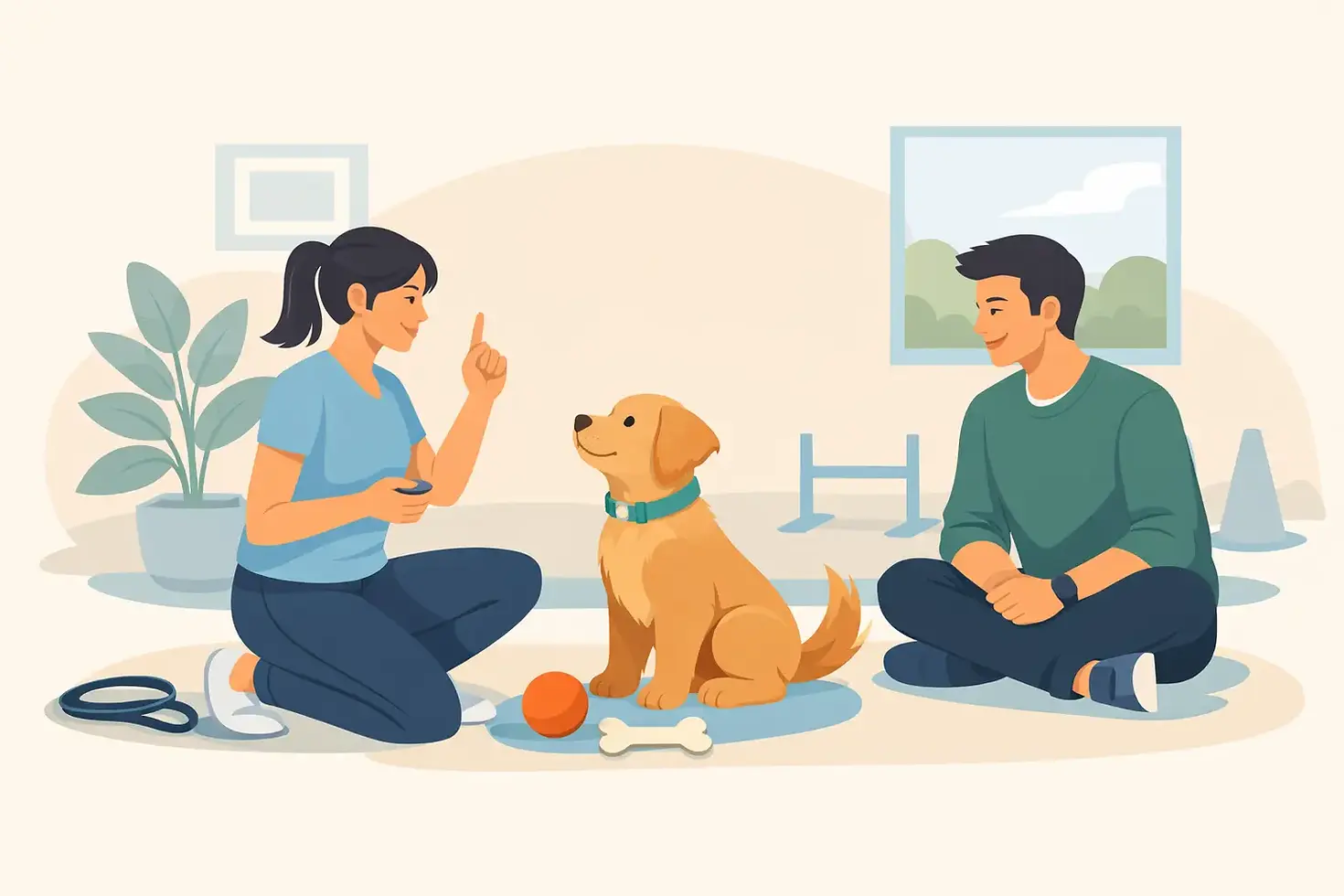
Private Puppy Training Sessions That Work
The first few weeks with a puppy are usually a mix of excitement, sleep loss, chewed corners, surprise puddles, and a lot of second-guessing. That is exactly where private puppy training sessions make a real difference. Instead of trying to fit your puppy into a generic class plan, you get help with the dog you actually live with, in the home and routines that are causing the problems.
That matters more than most people realize. Puppies do not struggle in theory. They struggle at your front door, in your hallway, around your kids, near your older dog, during mealtimes, and on the leash outside your building. Training works better when it happens where those habits are forming.
Why private puppy training sessions are often the better fit
Group classes can be useful for some dogs, but they are not automatically the best starting point for a young puppy. A shy puppy may shut down in a busy room. An overexcited puppy may spend the whole class rehearsing chaos. A puppy with nipping, barking, or toilet training problems does not need a broad lecture. The owner needs direct coaching on what to do at home, right when those issues show up.
Private puppy training sessions are built around that reality. The trainer sees the setup, the timing, the family routine, and the small details that are easy to miss in a facility. Maybe the crate is in the noisiest part of the house. Maybe the puppy is getting overtired before the evening zoomies start. Maybe everyone in the family is using different cues. Those are fixable problems, but only if someone takes the time to look.
The other major advantage is pace. Some puppies need a very simple plan and a couple of sessions to get everyone on track. Others need more support because the household is busy, the puppy came home too young, or the owner is juggling work and family. One-on-one training allows the plan to match the dog instead of forcing the dog into a package.
What should happen in a private puppy training session
A good session should feel practical, not performative. You should not be paying for fancy language, pressure to buy a bundle, or a trainer showing off with a puppy while you stand there watching. You should be learning how to handle your own dog.
In most cases, the first session focuses on the biggest daily-life issues. That often includes toilet training, crate or confinement routines, biting and nipping, jumping, leash introduction, attention around distractions, and how to prevent bad habits from becoming fixed patterns. If the puppy is nervous, mouthy, hyper, or struggling to settle, that should be addressed directly rather than brushed aside as something they will just outgrow.
The session should also be specific to your living situation. Apartment living is different from a house with a yard. A single adult has different challenges than a family with children. A home with cats or another dog needs a different setup than a one-pet household. Good training is not copy-and-paste.
Just as important, you should leave with a clear plan. Not twenty pages of theory. Not vague advice. A real plan for what to do in the morning, what to do when the puppy starts biting, how to handle bathroom trips, how to introduce the leash, and how to reward the behavior you want without accidentally rewarding the behavior you do not.
The problems owners usually want help with first
Most puppy owners do not call because they want a perfect sit. They call because daily life is getting messy fast.
Toilet training is one of the biggest reasons people look for private help. Timing, supervision, confinement, and consistency matter more than people think. When accidents keep happening, there is usually a reason. Sometimes the puppy has too much freedom too soon. Sometimes the owner is waiting too long between trips. Sometimes the signs are being missed. A private session helps fix the routine instead of blaming the puppy.
Biting and nipping are another common issue. Puppy biting is normal, but normal does not mean pleasant. If it is not handled properly, it can become a habit that stresses the whole household. Owners need to know when the puppy is overstimulated, when to redirect, when to pause interaction, and how to build calmer patterns instead of creating a game out of rough behavior.
Leash walking also starts earlier than many people expect. You do not need a formal heel from a tiny puppy, but you do need to teach that leash pressure is not a cue to panic, bite the leash, or drag the owner down the sidewalk. Early guidance saves a lot of frustration later.
Then there is socialization, which is one of the most misunderstood parts of puppy raising. Socialization is not just letting your puppy meet every dog and every person. Good socialization means building confidence, neutrality, and appropriate responses to the world. For some puppies, that means more exposure. For others, it means slower exposure with better control.
Why in-home training changes the outcome
A puppy can look great in a neutral training space and still fall apart at home. That is not because the puppy is stubborn. It is because behavior is tied to environment.
At home, the trainer can see where the puppy rushes the door, where accidents happen, where the barking starts, and where the puppy cannot settle. They can coach you through the exact moments that matter. That is far more useful than practicing in a polished room that has nothing to do with your real day.
In-home sessions also help with household management. Where should the crate go? How much space should the puppy have? How should kids interact? What is the safest way to introduce the puppy to resident pets? Those questions affect behavior every day, and they are best answered on site.
For many owners, convenience is not a luxury either. Loading up a stressed or unvaccinated puppy, traveling to a class, and trying to absorb instructions in a crowded setting is not always realistic. Private sessions remove that extra friction and let the work happen where it counts.
What to look for before you book
Not all private puppy training sessions are equal. Some are genuinely tailored. Others are just sales funnels for expensive packages.
Look for clear pricing, plain language, and a trainer willing to explain how sessions work before asking for money. You should know what you are paying for, whether there is pressure to prepay, and whether support continues after the visit. If a service is built around deposits, bundles, and urgency tactics, be careful. Owners often end up paying for more than they need before they even know whether the trainer is the right fit.
You also want someone who can explain training in normal language. Puppy owners should not have to decode jargon to understand how to stop accidents or reduce biting. Real experience shows in the ability to make things clear.
At CatDog Training, the one-on-one format is built around that kind of straightforward help - practical sessions, transparent flat-rate pricing, no forced packages, and support that does not disappear once the visit ends. That model suits puppy owners because puppies change quickly, and advice needs to keep up with real life.
When one session is enough, and when it is not
Some owners worry that if they do not commit to a package, they will not make progress. That is not always true. Sometimes one strong session with clear follow-through is enough to solve the main confusion and get the household moving in the right direction.
Other situations need more than that. A puppy with serious fear issues, ongoing household inconsistency, very intense nipping, or complicated multi-pet introductions may need follow-up. That is normal. The right question is not whether you need one session or five. The right question is whether each session solves the next real problem without locking you into more than necessary.
That flexibility matters. Puppies develop fast. A training plan should be able to adjust fast too.
The best results come from coaching the owner, not just the puppy
This is the part people often miss. Puppy training is not really about getting a young dog to perform on cue for a treat. It is about teaching the owner how to prevent bad habits, reward useful behavior, and respond consistently when the puppy is tired, wild, distracted, or confused.
That is why private coaching works so well. The puppy learns, but the owner learns too. Once that happens, everyday problems start getting smaller because the household finally has a system.
If you are considering private puppy training sessions, the goal is not perfection by next week. The goal is a calmer home, a clearer plan, and a puppy who is learning the right things in the right place. That is what makes the work stick long after the session ends.


Comments