
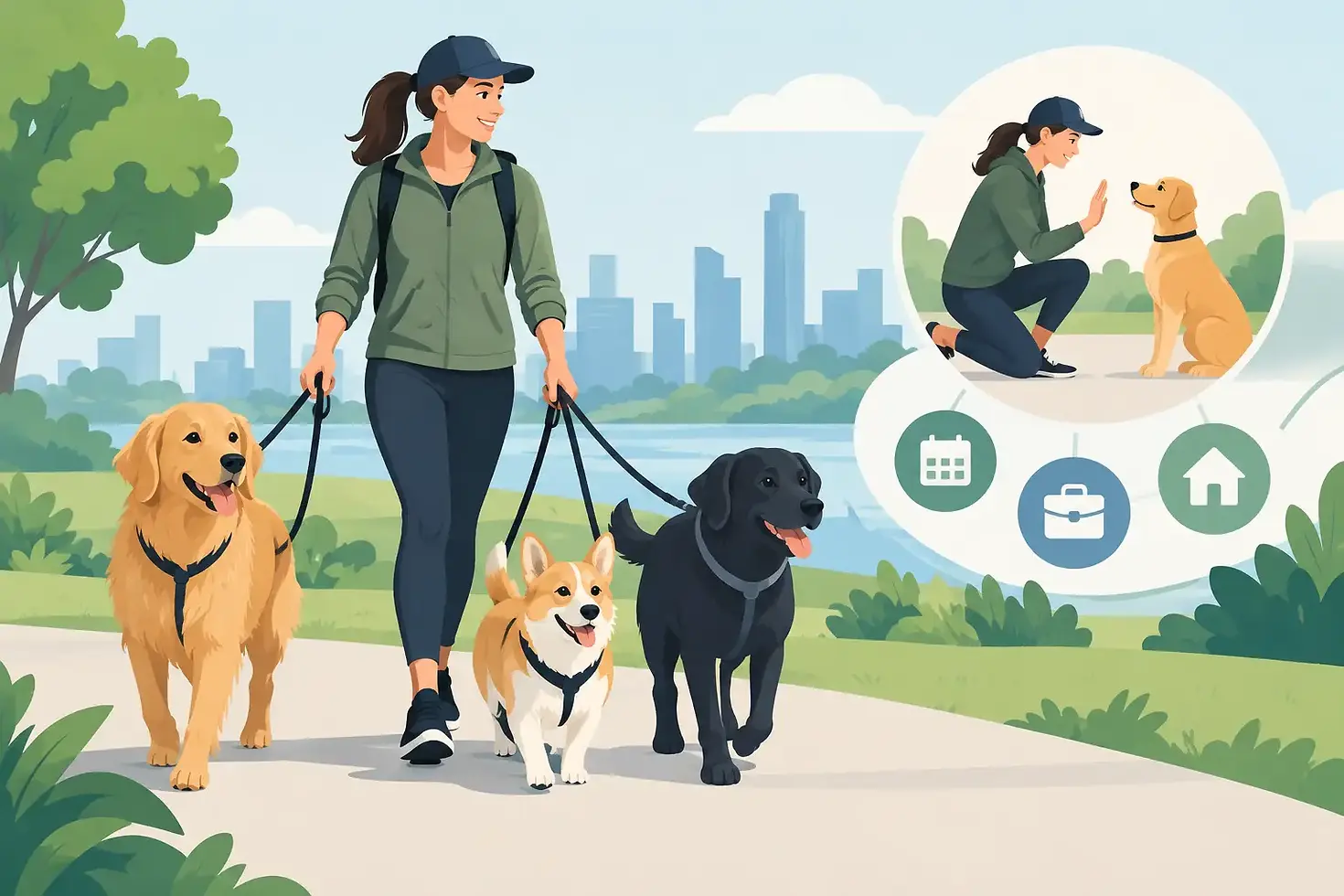
Dog Walking and Training Service That Fits Real Life
A dog that pulls toward every moving bicycle, freezes at the elevator, or turns a simple walk into a daily argument does not need a generic lesson in a room full of unfamiliar dogs. They need help where the problem actually happens. A dog walking and training service combines practical exercise with hands-on coaching, so your dog can learn better habits on the same streets, sidewalks, entrances, and home routines you deal with every day.
For many owners, the goal is not a perfectly performed routine for an audience. It is a dog who can leave the house calmly, walk without dragging someone down the block, settle after a walk, and respond when real life gets distracting. That takes an approach built around your household, your dog, and the situations that matter most.
What a Dog Walking and Training Service Should Do
A standard dog walk is useful for bathroom breaks, movement, and a change of scenery. But if your dog is rehearsing pulling, lunging, barking, scanning for triggers, or ignoring every cue along the way, more walking alone may not improve the situation. In some cases, it can strengthen the pattern because the dog repeats it every day.
Training during a walk gives those moments a purpose. The trainer can work on leash handling, attention, pace, stopping at curbs, polite greetings, recovery after a surprise, and returning focus to the handler. The owner can then see what is being done and why, rather than receiving a vague note that the walk went well.
This does not mean every walk should feel like a formal obedience drill. Dogs need time to sniff, move, and take in their environment. A good service balances structure with normal dog behavior. The right amount of training depends on the dog’s age, health, energy level, temperament, and the level of difficulty outside your front door.
A young puppy may need short, positive exposure sessions and gentle leash foundations. An adult dog with years of pulling may need clearer handling and consistent practice. A fearful dog may need more distance from triggers, not more pressure to confront them. The plan should fit the dog in front of you, not a preset package.
Why One-on-One Training Works Better in Real Settings
Group classes can be helpful for some dogs, especially those who are already comfortable around people and other dogs. They are not always the best starting point for a dog who barks in hallways, guards the front door, bolts through openings, or becomes overwhelmed outdoors.
Private sessions make it possible to address the exact sequence that causes trouble. If your dog loses focus when the leash comes out, that is where the session can begin. If the problem starts at the building entrance, the trainer can work at the building entrance. If your dog is calm with one family member but difficult with another, everyone who handles the dog can be included.
That is the practical advantage of in-home and real-world coaching. Training is not separated from daily life. You are learning how to hold the leash, set up a departure, interrupt an unwanted habit fairly, and reward the behavior you want in the moment it matters.
It also helps prevent a common problem: a dog who performs well for a trainer but not for the owner. A trainer can demonstrate, but the owner needs clear guidance and time to practice. The goal is not to make you dependent on weekly appointments. It is to leave you with usable skills and a plan you can follow between visits.
Walking Is Part of Behavior, Not Just Exercise
Dogs do not leave their behavior at home when they go outside. The dog that struggles with frustration indoors may pull harder when they see another dog. The dog that has had little exposure to traffic, crowds, delivery carts, or children may become uneasy on a busy block. The dog that receives no direction on walks may decide that every person, squirrel, and sound requires a response.
A thoughtful walking plan looks beyond distance. It considers what the dog encounters, how quickly they recover, whether they can check in with the handler, and whether the walk is creating calm or adding more excitement.
For some dogs, a longer walk is appropriate. For others, several shorter, more controlled outings may be more productive. A high-energy dog may benefit from fitness work, structured play, scent activities, or sports foundations in addition to walking. A senior dog may need a gentler pace and reliable routine. Exercise is valuable, but it is not a cure-all for fear, reactivity, separation distress, or serious aggression.
When safety is a concern, honesty matters. A responsible trainer should explain what can be worked on during a walk, what management tools may be needed, and when a veterinary professional or other specialist should be involved. No ethical service should promise that every behavior will disappear after one session.
What to Expect From the First Visit
The first session should feel like an assessment and a working appointment, not a sales presentation. Before changing anything, the trainer needs to understand the dog’s routine: feeding, sleep, exercise, household members, visitors, past training, medical history, and the specific situations that are difficult.
Then comes observation. How does your dog react when someone approaches the door? What happens when the harness appears? Does pulling begin immediately or only after a trigger appears? Is barking driven by excitement, worry, frustration, or learned habit? The details guide the training plan.
From there, you should receive straightforward instruction. That may include improving the fit and use of walking equipment, changing how you leave the home, practicing attention before movement, creating more space from triggers, or giving the dog a clearer alternative behavior. The best advice is simple enough to use when you are tired, late, or carrying groceries.
You should also know how service is priced before you commit. Pay-per-visit training is often a fairer option than being pushed into a large prepaid bundle before you know whether the approach and trainer are right for your dog. Clear flat-rate pricing, no deposits, and no pressure to purchase unnecessary sessions let owners make decisions based on progress and need.
Questions Worth Asking Before You Book
Choosing help for your dog is personal. You are inviting someone into your home or trusting them with your dog outside, so practical questions are not rude. They protect you and your pet.
Ask whether the service is private or group-based, whether training takes place in your home and neighborhood, and whether you will be shown how to continue the work yourself. Ask what happens if the dog is fearful, reactive, elderly, or not comfortable around other dogs. Ask how communication works after a visit and whether follow-up guidance is available.
It is also reasonable to ask about methods. You should receive a plain answer, not confusing jargon or a speech designed to make you feel uninformed. Good training includes clear boundaries, timing, consistency, and rewards that matter to the dog. It should never rely on intimidation, panic, or forcing a dog into a situation they cannot handle.
At CatDog Training, the focus is individual coaching in the environments where owners actually need help. That means sessions can address the walk itself, but also the home routines connected to it: door manners, settling after exercise, visitor behavior, socialization, household rules, and communication among family members.
Progress Comes From Repetition at Home
A trainer can set the direction, but daily repetition creates change. That does not require turning your whole day into a training project. Small, consistent choices usually matter more: waiting calmly before the door opens, rewarding a check-in before the leash tightens, practicing a short pause at the curb, or giving your dog a quiet place to settle after coming home.
Expect progress to be uneven. A dog may do well on a quiet Tuesday and struggle when construction starts outside or a loose dog appears across the street. That is not failure. It is information about what the dog can handle right now. Adjusting distance, pace, and expectations is part of responsible training.
The most useful dog walking and training service does not sell a polished fantasy. It gives you practical support, fair information, and skills that make ordinary days easier. When your dog can move through the world with more confidence and you know how to guide them, the walk stops being the hardest part of the day and becomes time you can both enjoy.


Comments