
A Real World Dog Training Guide for Daily Life
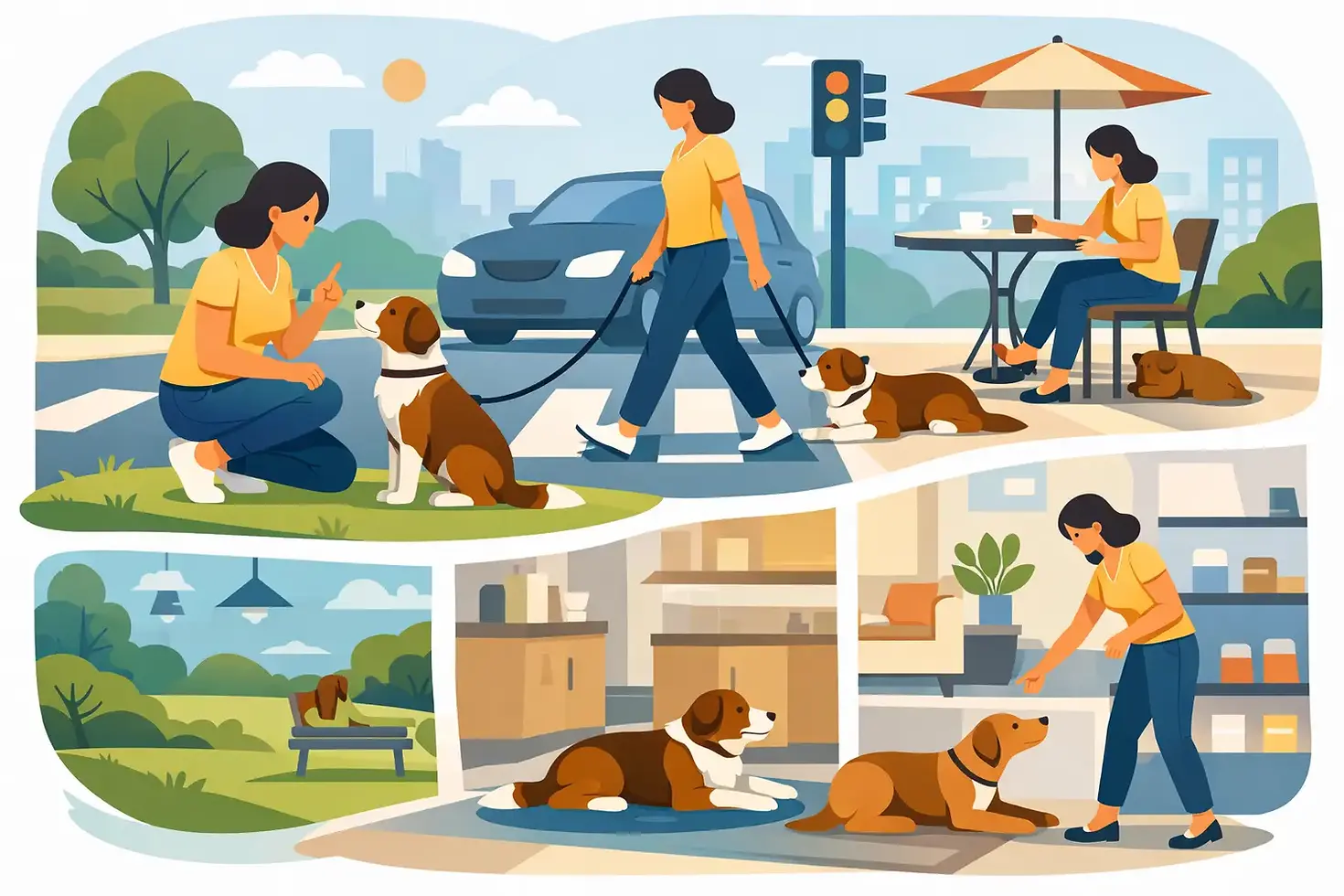
The real world dog training guide most owners need does not begin in a training hall with a row of obedient dogs. It begins at your front door when the delivery person arrives, on the sidewalk when another dog appears, and in the living room when your puppy decides the couch is more exciting than the bed you bought. Those are the moments that shape daily life with a dog.
A dog can sit beautifully for a treat in a quiet room and still pull down the street, bark from the balcony, jump on visitors, or ignore every cue when something more interesting happens. That does not mean your dog is stubborn or that you have failed. It means training needs to happen where the behavior happens, with a plan that makes sense for your home, schedule, neighborhood, and dog.
What Real-World Dog Training Actually Means
Real-world training is practical coaching for the situations you face every week. Instead of practicing only in a controlled setting, you work on the front gate, the hallway, the elevator, the car, the park path, or wherever the problem starts. The goal is not a perfect performance for strangers. The goal is a dog that can live safely and comfortably with your household.
This approach is especially useful because dogs do not automatically understand that a cue means the same thing everywhere. A dog may know “sit” in the kitchen but struggle outside when there are scents, movement, noise, and other dogs. Training in gradually more distracting environments helps the dog understand the cue, rather than simply memorizing one room.
It also gives the owner a realistic role. You do not need to become a professional trainer. You need clear timing, manageable exercises, and a routine you can continue after the session ends.
Start With the Problem, Not a Package
Good training starts by identifying what is actually happening. “My dog is bad on walks” can mean many different things: pulling toward smells, fear of traffic, excitement around dogs, lunging at people, freezing, or refusing to leave the building. Each situation needs a different response.
The same is true at home. Barking may be alert barking at sounds in the hallway, frustration at the window, separation-related distress, or a learned habit that has been accidentally rewarded with attention. A puppy that has accidents indoors may need a better schedule, closer supervision, a medical check, or clearer toilet-training steps. Generic advice often misses these details.
A one-on-one trainer should ask about your dog’s age, health, routine, history, triggers, household members, and environment before handing you a solution. A young rescue dog adjusting to a busy apartment building should not be trained exactly like a confident adult dog in a quiet suburban home.
Build Skills Where You Need Them
The most useful training is often simple, but it must be practiced consistently. Start with one or two skills that improve daily management right away. For many homes, that means a calm exit from the door, a loose-leash walking pattern, and a way to settle when visitors arrive.
At the Door
Door behavior matters because excitement builds quickly. If your dog rushes forward, jumps, or bolts when the door opens, do not wait until a guest is already inside to address it. Practice when nothing important is happening. Ask for a pause before opening the door, reward calm behavior, and close the door if your dog surges forward.
This is not about punishing excitement. It is about teaching a clear pattern: calm behavior keeps access open. Fast movement makes the opportunity pause. Short, repeatable practice is more effective than one long, frustrating session.
On the Walk
Leash training is not simply teaching a dog to walk beside your knee. Some dogs are comfortable walking slightly ahead as long as the leash remains loose and they can respond when needed. What matters is safety, communication, and a walk that does not leave you being dragged, worried, or exhausted.
If your dog pulls, first look at the reason. A dog that wants to sniff needs planned sniffing opportunities. A dog that is overexcited may need a calmer start before heading outside. A fearful dog may need more distance from the trigger, not more correction. For reactive behavior, the safest first step is usually management: create space, avoid forcing greetings, and work below the point where your dog explodes.
Progress is rarely a straight line. A dog may handle one quiet block well and struggle near a school, construction site, or crowded park. That is useful information, not a reason to give up.
Around Visitors and Household Activity
Dogs often repeat behaviors that work for them. Jumping can earn attention. Barking can make a person move away. Stealing food can result in a very rewarding snack. Training should change the pattern before the dog gets to rehearse it again.
For visitors, a designated mat or bed can give your dog a clear job while people enter. For counter surfing, management matters as much as training: keep food out of reach while teaching an alternative behavior. For multi-pet homes, introduce structure around food, resting spaces, toys, and greetings rather than hoping the animals will sort it out themselves.
A Real World Dog Training Guide Needs Management Too
Training and management are not opposites. Management prevents a problem from getting worse while your dog learns a better response. Using a baby gate, choosing a quieter walking route, moving a dog away from a window, or asking visitors to ignore an excitable dog at first are practical decisions, not shortcuts.
Owners sometimes worry that management means they are avoiding the issue. In reality, repeatedly putting a dog into situations they cannot handle can build frustration, fear, and stronger unwanted habits. The right amount of exposure depends on the dog. A social, overfriendly adolescent may benefit from practicing calm greetings. A worried dog may benefit from distance and a gradual confidence-building plan instead.
This is where personalized guidance matters. Training should be challenging enough to build new skills, but not so hard that your dog is overwhelmed every time.
Keep the Plan Small Enough to Follow
A plan only works if it fits real life. Most owners do better with several short practices than a complicated daily program they cannot maintain. Two minutes before a walk, a few repetitions at the door, and a calm settle exercise while you make dinner can create meaningful progress over time.
Focus on four basics:
Be consistent about the cue and the response you want.
Reward behavior you want repeated, especially in the early stages.
Prevent your dog from practicing the behavior you are trying to reduce.
Increase difficulty gradually by changing distance, distractions, or duration.
It is also fair to adjust expectations. Puppies need time to mature. Newly adopted dogs need time to settle. Older dogs may need a plan that considers pain, mobility, hearing, or vision changes. If behavior changes suddenly, a veterinary conversation should come before assuming it is purely a training issue.
What to Expect From One-on-One Help
A private training session should leave you with more than a list of commands. You should understand why the behavior is happening, what to do in the moment, what to practice between sessions, and what progress should realistically look like.
In-home and neighborhood-based coaching can be particularly useful for challenges that do not appear in a class setting. That includes leash pulling on your usual route, elevator behavior, introductions between pets, toilet training in your specific layout, visitor routines, and home rules that every family member can follow.
CatDog Training takes this practical approach seriously: training is built around your dog and your actual environment, not a prepaid package or a one-size-fits-all program. Clear per-session pricing also lets owners get the help they need without being pressured into a bundle before they know what will work.
Measure Better Progress
Do not judge training only by whether your dog is perfect. Look for useful changes: recovery after seeing a trigger, fewer pulls during a walk, a quicker response to a cue, less intense barking, or a calmer start when someone knocks. Those changes show that your dog is learning and that you are becoming easier for them to understand.
Some behavior issues need ongoing work, particularly fear, reactivity, separation distress, and habits that have been practiced for years. Honest training does not promise instant results. It gives you a workable process, helps you avoid setbacks, and adjusts the plan as your dog improves.
The best time to train is not when life finally becomes quiet and convenient. It is in the ordinary moments you want to enjoy more: opening the door without a struggle, taking a calmer walk, welcoming a friend, or relaxing at home with a dog who knows what is expected.


Comments